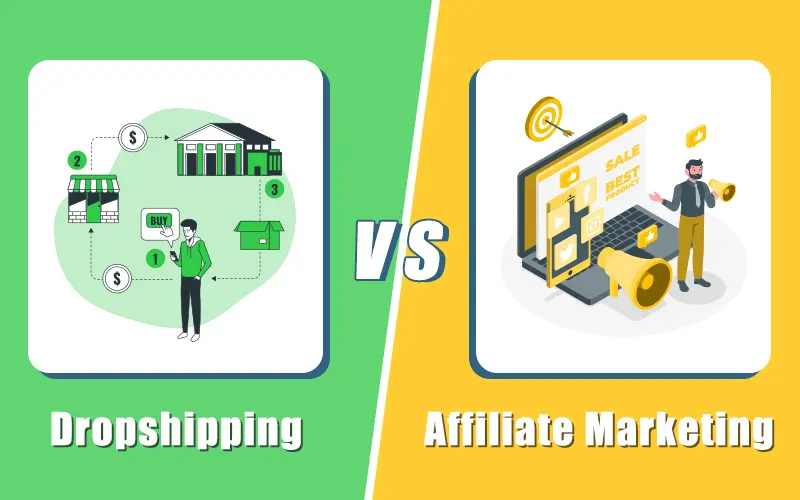
Choosing the Right Online Business Model in 2025
When I started my online journey, I was torn between dropshipping and affiliate marketing, lured by the promise of earning money from my laptop. I tried both—dropshipping phone accessories and promoting tech gadgets via affiliate links—and learned their strengths and pitfalls firsthand. In 2025, with U.S. e-commerce booming at $1.2 trillion, both models offer beginners a path to profit. This guide compares dropshipping and affiliate marketing to help you decide which is better for your goals, packed with practical insights and tools.
What Is Dropshipping?
Understanding the Dropshipping Model
Dropshipping lets you sell physical products online without holding inventory—suppliers ship directly to customers. I launched a Shopify store selling eco-friendly water bottles, earning $500 in my first month with no warehouse. It’s a low-risk way to enter e-commerce, but it requires managing customer service and marketing.
How Dropshipping Works
- You set up an online store (e.g., Shopify).
- Partner with suppliers via platforms like Spocket (spocket.co).
- Market products, and suppliers handle inventory and shipping.
- You keep the profit margin between supplier cost and sale price.
What Is Affiliate Marketing?
Understanding the Affiliate Marketing Model
Affiliate marketing earns commissions by promoting other companies’ products through links on blogs, social media, or videos. I made $200 in a month promoting tech gadgets on a blog with Amazon Associates. It’s ideal for those who love content creation and want minimal operational hassle.
How Affiliate Marketing Works
- Join affiliate programs like Amazon Associates (amazon.com/associates).
- Create content (blogs, TikToks, reviews) with affiliate links.
- Earn a commission (2–10%) when someone buys through your link.
- No inventory or customer service is required.
Dropshipping vs. Affiliate Marketing: Key Differences
Startup Costs
Dropshipping requires a small investment for a website and ads, typically $100–$500. Affiliate marketing can start with $0 if you use free platforms like Medium. I spent $50 on Shopify for dropshipping but started affiliate marketing for free on YouTube.
Cost Breakdown
| Aspect | Dropshipping | Affiliate Marketing |
|---|---|---|
| Initial Investment | $100–$500 (website, ads) | $0–$50 (optional hosting) |
| Ongoing Costs | $29–$50/month (platform, tools) | $0–$20/month (tools, hosting) |
| Examples | Shopify ($29/month) | WordPress (free), Canva (free) |
Time to Profit
Dropshipping can generate sales in 1–2 weeks with effective ads, but profits take 1–3 months. Affiliate marketing may take 3–6 months to build traffic for consistent earnings. My dropshipping store sold faster, but affiliate income grew steadily with content.
Profit Margins
Dropshipping margins are 10–30%, as you set prices but pay suppliers. Affiliate commissions range from 2–50%, depending on the program. I earned 20% margins dropshipping, but high-ticket affiliate programs like software offered 30% commissions.
Operational Responsibilities
Dropshipping involves managing a store, customer service, and refunds. Affiliate marketing focuses on content creation, with no customer interaction. I found dropshipping more hands-on, while affiliate marketing felt like “set it and forget it.”
Pros and Cons of Dropshipping
Pros of Dropshipping
- Control Over Branding: Create your own store and brand identity.
- Higher Margins Potential: Set your own prices for better profits.
- Scalable: Add new products or niches easily.
- Tangible Products: Sell physical goods customers can touch.
Cons of Dropshipping
- Customer Service: Handle complaints, returns, and shipping issues.
- Higher Startup Costs: Website and ad spend add up.
- Supplier Risks: Delays or quality issues can hurt your reputation.
Pros and Cons of Affiliate Marketing
Pros of Affiliate Marketing
- Low to No Cost: Start with free platforms like YouTube or Medium.
- Passive Income Potential: Earn from old content over time.
- No Inventory: No need to manage products or shipping.
- Flexible Content: Promote via blogs, videos, or social media.
Cons of Affiliate Marketing
- Lower Margins: Commissions are fixed, often 2–10%.
- Traffic Dependency: Requires consistent content to drive clicks.
- Program Restrictions: Some affiliates limit how you promote.
Which Business Model Is Better for Beginners?
Ease of Entry
Affiliate marketing is easier for beginners due to zero startup costs and no inventory management. I started affiliate marketing with a free WordPress blog, while dropshipping required learning Shopify. If you’re new to online business, affiliate marketing is less overwhelming.
Time Commitment
Dropshipping demands daily management—orders, ads, and customer emails. Affiliate marketing requires upfront content creation but less ongoing work. I spent 2 hours daily on my store but only 5 hours weekly on affiliate content.
Scalability
Dropshipping scales faster with paid ads and new products. Affiliate marketing scales slower, relying on organic traffic growth. My dropshipping store hit $5,000 monthly in six months, while affiliate income took a year to match.
Risk Level
Dropshipping carries financial risk from ad spend and potential refunds. Affiliate marketing is low-risk since you invest mostly time. I lost $100 on bad dropshipping ads but never risked money with affiliate marketing.
Tools for Dropshipping
E-commerce Platforms
A reliable platform is crucial for dropshipping. I used Shopify to build my store in a weekend, syncing with Oberlo for products. These tools simplify setup and scaling.
Top Dropshipping Tools
| Tool | Key Features | Cost | Where to Get |
|---|---|---|---|
| Shopify | E-commerce store, integrations | $29–$299/month | shopify.com |
| Spocket | U.S./EU suppliers, fast shipping | $24/month | spocket.co |
| Oberlo | Product sourcing, Shopify sync | Free with Shopify | oberlo.com |
Marketing Tools
Marketing drives dropshipping sales. I used Meta Ads to target eco-conscious shoppers, spending $50 to earn $200. SEO and email marketing also boost growth.
Best Marketing Tools
- Meta Ads (facebook.com): Target ads starting at $5/day.
- Mailchimp (mailchimp.com): Free email campaigns.
- SEMrush ($129/month, semrush.com): Keyword research.
Tools for Affiliate Marketing
Content Creation Platforms
Affiliate marketing thrives on content. I started with a free WordPress blog and YouTube videos, using Canva for visuals. Choose platforms that match your skills.
Top Content Platforms
- WordPress (wordpress.com): Free blogging platform.
- Medium (medium.com): Free for publishing articles.
- YouTube (youtube.com): Free for video content.
Affiliate Programs
Join reputable programs to earn commissions. I used Amazon Associates for tech products and ClickBank for higher payouts. Diversify programs for steady income.
Best Affiliate Programs
| Program | Commission Rate | Key Products | Where to Join |
|---|---|---|---|
| Amazon Associates | 2–10% | Physical goods | amazon.com/associates |
| ShareASale | 5–30% | Various niches | shareasale.com |
| ClickBank | 20–50% | Digital products | clickbank.com |
How to Get Started with Dropshipping
Step 1: Choose a Niche
Pick a niche with demand but low competition, like sustainable home goods. I used Jungle Scout ($29/month, junglescout.com) to find profitable products. Check Google Trends (trends.google.com) for trending niches.
Step 2: Set Up Your Store
Use Shopify ($29/month, shopify.com) for a user-friendly store. I customized a free theme and added products via Spocket. Secure a domain with GoDaddy ($10/year, godaddy.com).
Step 3: Market Your Products
Run ads on Meta Ads (facebook.com) and optimize with Yoast SEO (yoast.com). I spent $20/day on Instagram ads, driving 50 sales in a month. Email marketing via Mailchimp retains customers.
How to Get Started with Affiliate Marketing
Step 1: Choose a Niche
Focus on a niche you’re passionate about, like fitness or tech. I picked gadgets because I love reviewing them. Use Google Keyword Planner (ads.google.com) to find high-traffic keywords.
Step 2: Create Content
Start a blog, YouTube channel, or TikTok. I wrote product reviews on WordPress, embedding Amazon links. Use Canva (canva.com) for free visuals to boost engagement.
Step 3: Join Affiliate Programs
Sign up for Amazon Associates or ShareASale. I started with Amazon, earning 5% per sale, and later added ClickBank for 30% commissions. Promote links in content and social media.
Comparison: Dropshipping vs. Affiliate Marketing
| Category | Dropshipping | Affiliate Marketing | Best For |
|---|---|---|---|
| Startup Cost | $100–$500 | $0–$50 | Budget vs. No-Cost |
| Time to Profit | 1–3 months | 3–6 months | Fast vs. Steady |
| Profit Margin | 10–30% | 2–50% | Control vs. Variable |
| Responsibilities | Store, customer service | Content creation | Hands-On vs. Passive |
People Also Ask (PAA)
Is dropshipping or affiliate marketing more profitable?
Dropshipping offers higher margins (10–30%) with control over pricing, while affiliate marketing commissions (2–50%) depend on programs. Dropshipping scaled faster for me, but affiliate marketing is passive.
Can I do both dropshipping and affiliate marketing?
Yes, combine them for diversified income. I run a dropshipping store and add affiliate links to my blog. Use Shopify (shopify.com) for dropshipping and ShareASale (shareasale.com) for affiliates.
What are the best platforms for dropshipping?
Shopify ($29/month, shopify.com) and Spocket ($24/month, spocket.co) are top choices for beginners. They offer easy setup and reliable suppliers.
How much can beginners earn with affiliate marketing?
Beginners can earn $100–$1,000/month with consistent content. I made $200 in my first month with Amazon Associates (amazon.com/associates) on a small blog.
Common Mistakes to Avoid
Dropshipping: Poor Supplier Choice
Unreliable suppliers hurt your reputation. I had delays with an overseas supplier, losing customers. Stick to U.S.-based suppliers like Spocket (spocket.co) for faster shipping.
Affiliate Marketing: Spammy Content
Overloading links in low-quality content drives readers away. My early blog posts were too salesy, hurting traffic. Focus on valuable content with tools like Yoast (yoast.com).
Both: Ignoring Marketing
No marketing means no sales. I skipped ads for my store initially and got zero orders. Invest in Meta Ads (facebook.com) or SEO for both models.
Tips for Success
- Dropshipping: Test products with $10–$20 ad campaigns on Meta Ads.
- Affiliate Marketing: Create evergreen content like how-to guides.
- Both: Use Google Analytics (analytics.google.com) to track performance.
- Network: Join X communities for dropshipping or affiliate tips.
Where to Start
- Dropshipping Platforms: Shopify (shopify.com), Spocket (spocket.co), Oberlo (oberlo.com).
- Affiliate Programs: Amazon Associates (amazon.com/associates), ShareASale (shareasale.com).
- Marketing Tools: Mailchimp (mailchimp.com), Canva (canva.com), SEMrush (semrush.com).
- Learning Resources: Coursera (coursera.org), YouTube for free tutorials.
Conclusion: Dropshipping or Affiliate Marketing—Your Choice
Both dropshipping and affiliate marketing offer beginners a path to profit in 2025, but they suit different goals. Dropshipping is ideal for hands-on entrepreneurs who want control, while affiliate marketing fits those seeking low-cost, passive income. My journey taught me dropshipping scales faster, but affiliate marketing’s ease won me over long-term. Choose based on your budget, time, and passion—then start today!
FAQ
Which is easier for beginners, dropshipping or affiliate marketing?
Affiliate marketing is easier due to zero startup costs and no customer service. Start with WordPress (wordpress.com) and Amazon Associates (amazon.com/associates).
How much can I earn with dropshipping?
Beginners can earn $500–$5,000/month with dropshipping, depending on niche and marketing. I hit $2,000/month in six months using Shopify (shopify.com).
Do I need a website for affiliate marketing?
No, you can use YouTube or TikTok, but a blog on Medium (medium.com) boosts credibility. I started with a free WordPress blog.
Where can I find dropshipping suppliers?
Use Spocket (spocket.co) or Oberlo (oberlo.com) for reliable U.S. suppliers. They integrate with Shopify for seamless operations.
Can I switch from dropshipping to affiliate marketing?
Yes, they’re complementary. I added affiliate links to my dropshipping blog, doubling income. Use ShareASale (shareasale.com) alongside Shopify.